As requested by William Jones, a PhD student at Uppsala University (@JacanaJones on Twitter): Oleaginous Hemispingus, which, yes, is an English bird name.
 The Oleaginous Hemispingus, Sphenopsis frontalis. Image by Juan José Arango.
The Handbook of the Birds of the World begins its description of this species with “dingy, dull hemispingus with relatively slender bill”, which is not a promising start. A “hemispingus” is a genus of tanagers, found mostly in the Andes. The Oleaginous Hemispingus is found at medium altitudes (1400-2900 m) in dense forests of Venezuela, Colombia, Ecuador, and Peru, eats insects, and sings in quartets.
The word “spingus” comes from the Greek σπίνος (spinos) meaning “finch”; I’m also seeing references to a Greek word σπίγγος (spiggos) to mean “chaffinch”, but I can’t actually confirm this. The prefix “hemi”, of course, means “half” — think “hemisphere” — and actually comes from the same root as the more productive prefix “semi” (Greek ήμι, emi, versus Latin semi-, Sanskrit sami-, Old English sam-, etc). Hemispinguses are tanagers that look like finches, or half-finches. Hemi-finches. Hemi-spingus.
 A semi-circle.
The word “oleaginous” means “having the nature or properties of oil”, according to the OED, from the French oléagineux, same meaning, or the Latin oleāginus meaning “relating to the olive tree”. I’m guessing this bird gets this name via the Latin meaning, because it’s olive-coloured? But, uh, if you’re reading this and have a better idea, let me know?
 Olive trees, which produce olives, which are oily, and also yellow-green?
The genus name, Sphenopsis, means “wedge-appearing”, from the Greek σφήνα, spena, “wedge”, and όψις, opsis, “appearance, sight, vision”. The form “opsis” you’re probably familiar with, particularly if you’re a scientist: optical, opsin, Arabidopsis (“thing that looks like genus Arabis“). Anyway, genus Sphenopsis was first described as having a much more wedge-shaped beak than similar species.
 Arabidopsis thaliana. Photo by M G Tuffen.
The species name frontalis is Latin for “forehead” and is typically given to species with something distinctive going on in the front bit of the skull. For example: the Wrybill (Anarhynchus frontalis) has a distinctive white forehead; the Blue-fronted Redstart (Phoenicurus frontalis) has a blue head contrasting with a red body; the Collared Treepie (Dendrocitta frontalis) has a black head contrasting with a white body. The Oleaginous Hemispingus has a bit of an eyebrow going on, so I guess that’s good enough.
This is, remarkably, our first tanager, so! The family name for tanagers, Thraupidae, comes from the Ancient Greek word θραυπίς, thraupis, which was a word used by Aristotle to mean a species of finch, possibly the Eurasian Siskin. The genus Thraupis has been largely replaced with Tangara, which is a Tupi* word meaning “dancer” and the source of the English word “tanager”. (Compare the tanager genus Saltator, which is Latin for “dancer”.)
* “Tupi” is actually a language family, comprising at least 70 different languages. That sentence that I wrote is the equivalent of saying “चिड़िया is the Indo-European word for ‘finch'” — it’s actually the Hindi word for “finch”, not a word that equally applies to all other Indo-European languages like English, Russian, or Kurdish. Unfortunately, I don’t know which Tupian language “tangara” comes from. The 1760 record just says that it’s a “Brazilian” word. The best I can do is tell you that the Wayampi word for “tanager” is tängala.
 Brazilian performers of the samba de roda, an Afro-Brazilian dance. Image via Wikipedia.
 A gemsbok/oryx — a large southern African antelope. Photo by Yathin S Krishnappa.
 Rice. Image via
  A Southern Red Bishop, by JJ Harrison.
 Image description: a French braid. Or “plait” if you’re British.
 The painting “Penelope and the Suitors” by John William Waterhouse. In the Odyssey, Penelope, wife of Odysseus, refuses to marry again until she’s woven a shroud for Laertes. Except every night she un-weaves the weaving she had done that day. (Yes, Penelope’s faithful to Odysseus, not knowing if he’s alive, whereas Odysseus cheats on her multiple times.)
 “RED: the blood of angry men!” (a lyric in “Red & Black” from the musical Les Mis) (this is a picture of Enjolras, a character from Les Mis)
 A Joyful Greenbul. Photo by Francesco Veronesi.
 La Sagrada Familia, the Barcelona basilica designed by Gaudi. Whether or not it is gaudy is up for debate. Photo by Wikipedia user SBA73.
 The back of a bulbul (specifically a Red-whiskered Bulbul, by Shiva Shankar), looking pretty normal to me.
 (Image in the public domain, from the Proceedings of the Zoological Society of London, vol 1871, plate XXXII, via Wikipedia)
 Image by Justin Foulkes / Lonely Planet
 Flan. Basically the same thing as “fluff”.
 I only just learned that Brits refer to the game “Clue” as “Cluedo”. And also that the movie “Clue” didn’t earn back it’s budget. Both of these things are very strange facts.
 A broom. From the Old English br
 Christmas Boobook. Photo by Ian Montgomery.
 True story: I once had a British housemate who told me and a Canadian a story about a “clerk” and we thought it was a story about a “clock”. Non-rhotic dialects ftw.
 This is apparently a picture from Christmas Island. Photo source:
  A portmanteau — a type of traveling case — itself a portmanteau of porte meaning “carry” and manteau meaning “coat”.
 That gargoyle on top of Notre Dame that everyone who’s done the climb takes the exact same picture of? Yeah, that gargoyle’s called “Le Stryge”. Photo by Wikipedia user Prosthetic Head.
 Edward Cullen, one of the vampires from the series Twilight. Not a screech-owl.
 An image of Napoleon looking very French, or something.
 This is a Philly cheesesteak. If you eat meat, it is delicious.
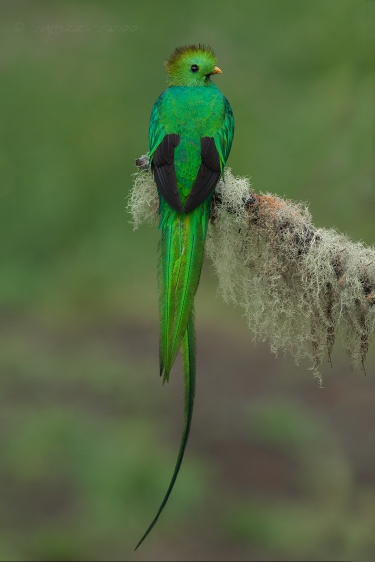 Resplendent Quetzal (image by Supreet Sahoo, via Wikipedia).
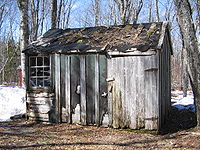 I had never before thought about the origin of the word “shack”, but the OED backs up Wikipedia on this: it’s probably Nahuatl. For the curious, “shackle” comes from the Old English
  This is what comes up when you Google “resplendent.” It’s certainly very lovely? Image by Gaëtan Bourque.
 This is Benedict Cumberbatch as Stephen Strange. He has a very long cloak (the “cloak of levitation,” not that I’m a Marvel fan or anything). He is not a lighthouse.
 You can gnaw on trees to build yourself a nest…or you can gnaw on cookies. Om nom cookies.
 Das ist ein Zilpzalp von Wikipedia. Andreas Trepte ist der Fotograf.
 Petticoats. Almost like pettichaps? (Image source: Wikipedia.)
 (Delicious, delicious filo dough. Image source: Wikipedia.)
 You can lead a horse to water, but you can’t make him scope.
 White-winged Diuca-finch. Not the greatest picture, but it’s what’s in the public domain. Source: Wikipedia.
 This is the Altiplano. Isn’t it beautiful? Definitely on my list of places to go someday.
 Those darn Vikings and their Old Norse loanwords! (Like, for example, the word “loan,” which came from the Old Norse lán.)
 Sumatran Niltava, Niltava sumatrana (Passeriformes: Muscicapidae). Source: Internet Bird Collection
 Rafflesia arnoldii, via Wikipedia. The genus was named after Sir Thomas Stamford Raffles, the founder of Singapore who took Java over from the Dutch in 1811. The species name comes from Joseph Arnold, a British surgeon who ended up stranded in what is now Jakarta and took up botany because why not. This Joseph Arnold is not to be confused with the Rhode Islander
  The Pokemon “Vileplume.”
 Amorphophallus titanum. Genus from the Greek άμορφος “amorphos” meaning “amorphous” (literally “without form” — think morphology, morphospace, morph, etc) and φαλλός “phallos” meaning “phallus.” See, Greek is not a hard language. The species name “titan” just means “big,” referring to the Titans, who in ancient Greek mythology preceded the Olympians (the Greek gods we know and love) — think Titanic (a big ship), Titan (the biggest of Saturn’s moons), etc. Titanium, the element, was discovered right after uranium, and in mythology Uranus was the father of the Titans.
 The location of Sumatra, via Wikipedia.

#/media/File:Minist%C3%A9rio_da_Cultura_-_Samba_de_roda_com_baianas_e_Ol%C3%ADvia_Santana.jpg)
